Timurid Dynasty: Timur, Herat and the Timurid Renaissance
The Timurid dynasty (1370–1507): Timur’s violent conquests, then a Persianate golden age of art, poetry and astronomy in Herat and Samarkand.
 Open the interactive map
Who founded the Timurid dynasty?
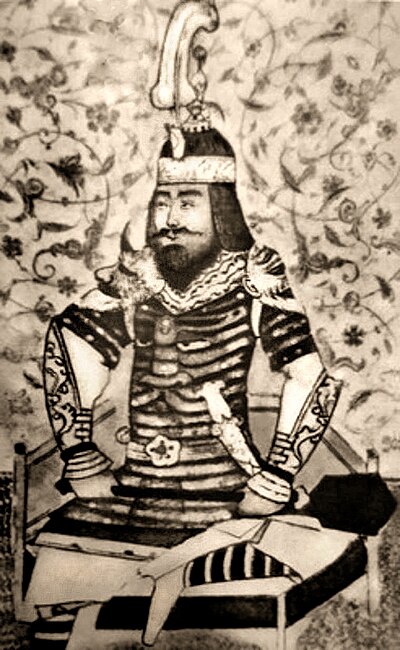
The Timurid dynasty was founded by Timur (Tamerlane in European sources), a Turkic-speaking commander of the Mongol Barlas tribe from Transoxiana. Because he was not descended from Chinggis Khan, he ruled through puppet khans and styled himself güregen, royal son-in-law, after marrying a Chinggisid princess. He was proclaimed ruler at Balkh in 1370 and made Samarkand his capital.
From the 1380s Timur invaded Iran, the Caucasus, Iraq, Syria, India and Anatolia. Contemporary chroniclers describe massacres and towers of skulls at cities such as Isfahan, Baghdad and Delhi; the exact numbers cannot be verified, but the destruction was real. In 1402 he defeated the Ottoman sultan Bayezid I at Ankara, and he died in 1405 at Otrar while preparing to invade Ming China.
The Timurid Renaissance in Herat and Samarkand
Timur’s heirs turned conquest into patronage. His son Shahrokh ruled from Herat, and Shahrokh’s wife Gowharshad commissioned the mosque that bears her name in Mashhad in 1418. Their son Ulugh Beg built a great observatory in Samarkand in the 1420s, whose star catalogue remained a reference for centuries. Prince Baysonghor’s workshop produced a celebrated Shahnameh manuscript in 1430. Under Sultan Husayn Bayqara, late fifteenth-century Herat was home to the poet Jami, the Chaghatay Turkic poet Ali-Shir Nava’i and the painter Behzad. Historians often call this flowering the Timurid Renaissance.
Decline and legacy
Timurid unity rarely outlasted a single ruler. Western Iran fell to the Turkmen Qara Qoyunlu and Aq Qoyunlu confederations, and in 1507 the Uzbeks under Muhammad Shaybani took Herat. Yet the dynasty’s artistic and administrative models passed to the Safavids, the Ottomans and above all the Mughals of India, founded in 1526 by Babur, a Timurid prince.
Timeline of events
1405 CE · Timurid Renaissance in Herat
Under Shah Rukh and his wife Goharshad, Herat becomes the cultural capital of the Islamic world. Persian miniature painting, architecture, and literature reach new heights. (Herat) View on map
1418 CE · Goharshad Mosque Built
Queen Goharshad commissions the magnificent mosque adjacent to the shrine of Imam Reza in Mashhad, a masterpiece of Timurid architecture. (Mashhad) View on map
1420 CE · Ulugh Beg's Madrasa on the Registan
Ulugh Beg, Timur's grandson and governor of Samarkand, built his madrasa on the city's Registan square between 1417 and 1420. Alongside the religious sciences, mathematics and astronomy were taught there by scholars such as Qadizada Rumi, and the school was linked to the observatory Ulugh Beg built nearby in the 1420s. It is the oldest of the three madrasas that now frame the Registan, in today's Uzbekistan, and part of the shared heritage of Central Asia and Iran. (Samarkand) View on map
1420 CE · Ulugh Beg's Observatory in Samarkand
Timurid prince Ulugh Beg builds a major observatory in Samarkand and compiles the most accurate star catalogue of the medieval world with Iranian astronomers. (Samarkand) View on map
1427 CE · Jamshid Kashani's Key to Arithmetic
Ghiyath al-Din Jamshid Kashani, an astronomer and mathematician from Kashan, joined Ulugh Beg's scholarly circle in Samarkand and there finished the Meftah al-hesab ("Key to Arithmetic", 1427), a major treatise that sets out calculation with decimal fractions. In 1424 he had calculated π to 16 decimal places, and his earlier Khaqani zij, dedicated to Ulugh Beg, revised the Ilkhani astronomical tables of Nasir al-Din Tusi. He died at Samarkand in 1429. His Samarkand years, in today's Uzbekistan, make his work part of the shared heritage of Central Asia and Iran. (Samarkand) View on map
1430 CE · The Shahnameh's Enduring Legacy
The Shahnameh becomes Iran's national epic, recited in coffeehouses, illustrated in royal manuscripts, and performed by naqqali (storytellers) for centuries. With nearly 60,000 couplets and almost no Arabic loanwords, it preserves a purified Persian language. The Baysonghori Shahnameh (1430) and other illustrated editions become treasures of Islamic art. (Herat) View on map
1430 CE · Baysunghur's Royal Workshop at Herat
Prince Baysunghur (1397–1433), a son of the Timurid ruler Shahrokh, ran a royal library-workshop (ketabkhane) at Herat that brought together calligraphers, painters, illuminators and bookbinders, some of them brought from Tabriz. Its best-known product is a Shahnameh completed in 1430, written in nastaʿliq with 21 paintings, whose preface says the text was compiled by comparing earlier copies of Ferdowsi's poem. The workshop's work set standards that later Persian court book arts followed. (Herat) View on map
1470 CE · Jami: Last Great Classical Persian Poet
Abd al-Rahman Jami, the last great classical poet of Persian literature, writes Haft Awrang and numerous works on Sufism in Herat. (Herat) View on map
1470 CE · The Naqshbandi Order at the Timurid Courts
In Timurid Herat the poet ʿAbd al-Rahman Jami became a disciple of the Naqshbandi master Saʿd al-Din Kashghari, and he later corresponded with Khwaja ʿObaydallah Ahrar, the order's leading figure, who was based in Samarkand and Tashkent. Ahrar won great influence over Timurid princes: in 1460, for example, he persuaded Sultan Abu Saʿid to lift some taxes in Samarkand and Bukhara. Such ties show how far Sufi masters reached into government in the Persianate courts of the Turco-Mongol Timurids. (Herat) View on map
1490 CE · Behzad, Painter of Timurid Herat
Kamal al-Din Behzad worked in Herat under the Timurid sultan Husayn Bayqara and was hailed by later Persian writers, such as the historian Khwandamir, as the foremost painter of his age. Only a few works are securely his, above all the illustrations of a 1488 copy of Saʿdi's Bustan, now in Cairo, which carry his signature; many other attributions are debated by art historians. A decree attributed to the Safavid Shah Esmaʿil (1522) names him head of the royal library in Tabriz. (Herat) View on map
Frequently asked questions
Was Timur Persian or Mongol?
Neither label fits neatly. Timur came from a Turkicised Mongol tribe, spoke Turkic and probably Persian, legitimised himself through Chinggisid and Islamic symbols, and relied on Persian scribes. His dynasty’s court culture became strongly Persianate.
What was the Timurid Renaissance?
It is a modern term for the fifteenth-century flowering of Persian poetry, manuscript painting, calligraphy, architecture and astronomy under Timur’s descendants, centred on Herat and Samarkand.
Key events on the map
- 1370 CE · Timur's Coronation in Balkh
- 1405 CE · Timurid Renaissance in Herat
- 1418 CE · Goharshad Mosque Built
- 1420 CE · Ulugh Beg's Observatory in Samarkand
Guided storylines
- Iran ii. Iranian History (2) Islamic Period (page 3) — Encyclopaedia Iranica
- Herat iii. History, Medieval Period — Encyclopaedia Iranica
- Gowhar-Šād Āḡā — Encyclopaedia Iranica
- Samarqand i. History and Archaeology — Encyclopaedia Iranica