The Enlightenment and the Age of Revolutions (c. 1680–1848)
The Enlightenment and the Age of Revolutions: Newton to Kant, America, France and Haiti, rights and slavery, women's rights, and the debates that followed.
 Open the interactive map
What was the Enlightenment?
The Enlightenment was an intellectual and cultural movement in Europe and its colonies, roughly from the late seventeenth century to the end of the eighteenth, whose writers argued that reason, evidence and open debate should be used to examine religion, government, society and nature. In 1784 Immanuel Kant answered the question "What is Enlightenment?" with the motto "Dare to know". It was never a single programme: there were French, Scottish, German, Italian, Dutch and American versions, radical and moderate wings, and Christian, deist and atheist thinkers.
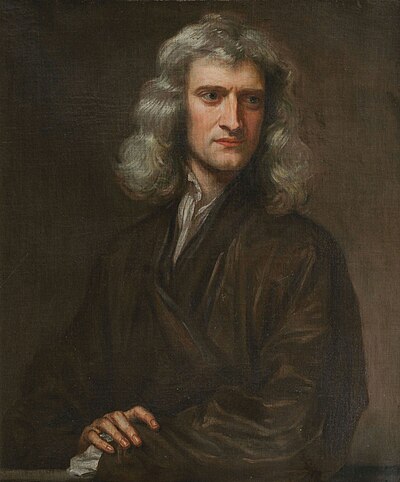
The movement built on the Scientific Revolution, especially Isaac Newton's Principia (1687), which seemed to show that nature followed universal laws that could be expressed mathematically. Many writers hoped that similar methods could improve law, medicine, education and economic life.
Ideas, books and networks
John Locke's Two Treatises of Government (1689) argued that government rests on the consent of the governed and protects life, liberty and property. Montesquieu's The Spirit of the Laws (1748) analysed the separation of powers. Voltaire attacked religious persecution, Jean-Jacques Rousseau's The Social Contract (1762) located sovereignty in the people, and Adam Smith's The Wealth of Nations (1776) became a founding text of political economy. Denis Diderot and Jean le Rond d'Alembert's Encyclopédie (from 1751) gathered technical and critical knowledge in dozens of volumes despite censorship.
Ideas travelled through cheap print, journals, academies, Masonic lodges, coffeehouses and salons, many of them hosted by women such as Madame Geoffrin. Women also wrote and argued: Émilie du Châtelet translated Newton's Principia into French, and Mary Wollstonecraft's A Vindication of the Rights of Woman (1792) demanded education and equal rational standing for women. Some rulers, including Frederick II of Prussia and Catherine the Great of Russia, adopted Enlightenment language while keeping absolute power.
The Enlightenment and the wider world
Enlightenment writers often used other civilisations to criticise their own. Montesquieu's Persian Letters (1721) imagined two Persian travellers commenting on French society, and Voltaire praised Confucian China as a model of rational government. These portraits said more about Europe than about Iran or China, yet they show how much travel literature and trade shaped European thought.
The same period saw the transatlantic slave trade at its height. Some Enlightenment figures, including the Abbé Raynal and Condorcet, condemned slavery, and the abolitionist movement drew on both Enlightenment and religious arguments, led in large part by Black writers and activists such as Olaudah Equiano. Others, including David Hume and Kant, wrote racist hierarchies of humanity, and many defenders of liberty owned or profited from enslaved people. Historians continue to debate how far the Enlightenment's universal claims were undermined by these exclusions.
Revolutions in America, France and Haiti
Historians speak of an "Age of Revolutions" or "Atlantic Revolutions" from about 1775 to 1848. Thirteen British colonies in North America declared independence in 1776, claiming that "all men are created equal", and won it by 1783, yet the new United States kept slavery and expanded onto Native American lands. In France, a fiscal crisis led to the meeting of the Estates-General in 1789, the storming of the Bastille and the Declaration of the Rights of Man and of the Citizen. The Revolution abolished feudal privileges and the monarchy, declared a republic in 1792 and, during the Terror of 1793–1794, executed thousands of real and suspected opponents. Olympe de Gouges, author of a Declaration of the Rights of Woman (1791), was among those guillotined.
In the French colony of Saint-Domingue, enslaved people rose in 1791. Under leaders including Toussaint Louverture, they forced the abolition of slavery, which the French Republic extended to its colonies in 1794. Napoleon tried to restore French control and reinstated slavery in other colonies in 1802; the revolutionaries defeated his army, and in 1804 Haiti became independent: a state founded by formerly enslaved people, in which slavery was abolished for good.
Napoleon, Latin America and 1848
Napoleon Bonaparte, crowned emperor in 1804, spread a reformed legal code across much of Europe through conquest. His invasion of Spain in 1808 helped trigger the independence wars of Spanish America, which ended with the patriot victory at Ayacucho in 1824. After Napoleon's defeat, the Congress of Vienna (1814–1815) restored many monarchies, but liberal and national movements returned in the revolutions of 1848, which spread from Paris to Vienna, Berlin, Milan and Budapest. Most were suppressed within two years, though France abolished slavery in its colonies again in 1848 and several states kept new constitutions.
Legacy and debate
The Enlightenment and the revolutions left ideas of human rights, constitutional government, religious toleration and secular inquiry that later movements, including anti-colonial ones, used against European powers themselves. Iran's Constitutional Revolution of 1905–1911 drew in part on these vocabularies, combined with Iranian and Islamic traditions. Critics from the Romantic "Counter-Enlightenment" to twentieth-century thinkers such as Max Horkheimer and Theodor Adorno argued that faith in reason could also serve domination. Historians today tend to see the Enlightenment as a set of arguments with many authors, including outside Europe, rather than a finished achievement belonging to one civilisation.
Frequently asked questions
What were the main ideas of the Enlightenment?
Common themes included the use of reason and evidence, criticism of religious intolerance and arbitrary power, natural rights, government by consent, the separation of powers, freedom of expression and the hope of progress through science and education. Enlightenment thinkers disagreed sharply on many of these points.
What were the Atlantic Revolutions?
A term historians use for the connected revolutions around the Atlantic between about 1775 and 1848: the American Revolution, the French Revolution, the Haitian Revolution, the Spanish American wars of independence and the European revolutions of 1830 and 1848.
Did the Enlightenment oppose slavery?
Not as a whole. Some thinkers condemned it and abolitionists used Enlightenment arguments, but others justified racial hierarchy, and slavery expanded during the eighteenth century. Abolition owed much to enslaved people's own resistance, above all the Haitian Revolution, and to religious and Black-led campaigns.
Why did Montesquieu write about Persians?
In the Persian Letters (1721) he used two fictional Iranian travellers, Usbek and Rica, as outsiders whose letters could satirise French politics, religion and customs. The book drew on travel accounts of Safavid Iran by writers such as Jean Chardin, but its Persia is largely a literary device.
Key events on the map
- 1687 CE · Newton Publishes Principia Mathematica
- 1734 CE · Voltaire and the Enlightenment
- 1751 CE · Diderot and d'Alembert Launch the Encyclopédie
- 1776 CE · American Declaration of Independence
- 1789 CE · French Revolution
- 1791 CE · Haitian Revolution: From Slave Uprising to Independence
- 1792 CE · Mary Wollstonecraft's A Vindication of the Rights of Woman
- 1824 CE · Battle of Ayacucho Seals South American Independence
- 1848 CE · Revolutions of 1848 Sweep Europe
Guided storylines
- Enlightenment — Stanford Encyclopedia of Philosophy
- Enlightenment (European history) — Encyclopaedia Britannica
- French Revolution — Encyclopaedia Britannica
- Toussaint Louverture — Encyclopaedia Britannica
- Mary Wollstonecraft — Stanford Encyclopedia of Philosophy